
Landscape Lighting
Landscape Lighting > Garden Lights • Lights • Patio Lights
Landscape Lighting Installation • Landscape Lighting at eBay
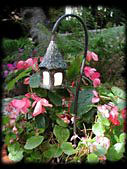 Landscape lighting is often designed for its aesthetic effect more than
its practical use. So, as in painting, careful thought must be given
to color, level, and placement of the landscape fixtures. Garden
lighting should offer a blend of cool light sources for planting beds and
landscaped areas and warm light sources for outdoor living areas.
Individual light sources should be kept dim for compatibility with
nighttime ambient light levels and to avoid glare and light
pollution. Plan to use candles or other small temporary lighting
sources near cooking and eating areas, as required. Consider the
relative light levels indoors and outdoors in the evening hours, when you
wish to enjoy the view of your illuminated landscape from indoors and
perhaps from an outdoor deck or patio.
Landscape lighting is often designed for its aesthetic effect more than
its practical use. So, as in painting, careful thought must be given
to color, level, and placement of the landscape fixtures. Garden
lighting should offer a blend of cool light sources for planting beds and
landscaped areas and warm light sources for outdoor living areas.
Individual light sources should be kept dim for compatibility with
nighttime ambient light levels and to avoid glare and light
pollution. Plan to use candles or other small temporary lighting
sources near cooking and eating areas, as required. Consider the
relative light levels indoors and outdoors in the evening hours, when you
wish to enjoy the view of your illuminated landscape from indoors and
perhaps from an outdoor deck or patio.
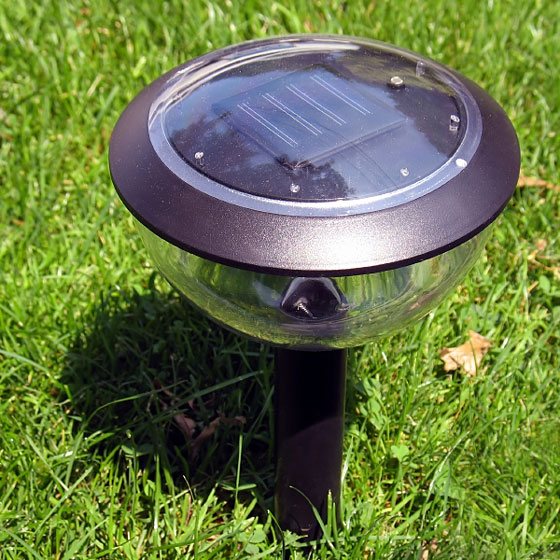 Landscape lighting sources should be unobtrusive and located near ground
level. A number of small landscape lights, carefully placed to
accent the features of the yard and garden, can create a warm, inviting
atmosphere. When designing your outdoor lighting, consider the yard
as a group of related spaces rather than trying to light the entire
area uniformly.
Landscape lighting sources should be unobtrusive and located near ground
level. A number of small landscape lights, carefully placed to
accent the features of the yard and garden, can create a warm, inviting
atmosphere. When designing your outdoor lighting, consider the yard
as a group of related spaces rather than trying to light the entire
area uniformly.
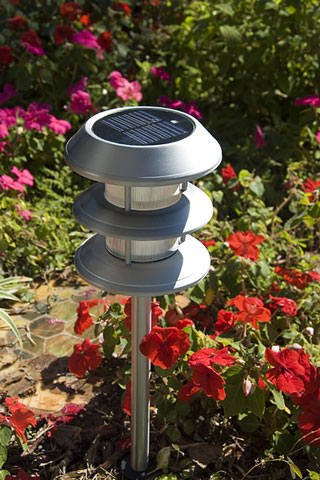 Low voltage (or solar) landscape lighting can be less costly to purchase
and install than exterior lighting powered by household current. In
any case, be sure to buy lighting fixtures, wire, and accessories that
are designed for outdoor use. Retain the services of a qualified
professional lighting installer, especially if you plan to power your
landscape lighting installation with household current. Of course,
solar landscape lights are the easiest to install, because they require
no electrical cable installation.
Low voltage (or solar) landscape lighting can be less costly to purchase
and install than exterior lighting powered by household current. In
any case, be sure to buy lighting fixtures, wire, and accessories that
are designed for outdoor use. Retain the services of a qualified
professional lighting installer, especially if you plan to power your
landscape lighting installation with household current. Of course,
solar landscape lights are the easiest to install, because they require
no electrical cable installation.
Landscape Lighting Manufacturers
- CAST Lighting
Solid bronze landscape lighting products, including LEDs.
www.CAST-Lighting.com - Cooper Lighting
Complete solutions for almost every landscape lighting need.
www.CooperIndustries.com - CopperMoon
Architectural lighting, landscape lighting, street and area lighting.
www.CopperMoon.com - Kichler Landscape Lighting
Professional-quality outdoor lighting, landscape lighting, and garden lighting.
www.Kichler.com - Stone Manor Lighting
Hand-made copper, sculpted bronze, and slumped stained glass outdoor landscape lighting.
www.StoneManorLighting.com - Unique Lighting Systems
Low voltage lighting products, information, and resources.
www.UniqueLighting.com - Vista Outdoor Lighting
Manufacturer of specification grade, architectural, and landscape lighting fixtures.
www.VistaPro.com - Best Quality Lighting
California-based manufacturer of die cast brass, low voltage landscape lighting fixtures.
www.BestQualityLighting.com
Related Outdoor Lighting Resource
- Outdoor Lighting Fixtures - features ideas and information about entry lights and step lights, as well as security lighting fixtures.
All rights reserved. About Us.
For your convenience, certain links will open in new windows.